PMBOK vs PRINCE2 explained: key differences and similarities
This blog is reader-supported. When you purchase something through an affiliate link on this site, I may earn some coffee money. Thanks! Learn more.
I often get asked about the difference between A Guide to the Project Management Body of Knowledge (the PMBOK® Guide) and PRINCE2®, usually because the person is asking is working in an environment that references one or the other, or both.

Why listen to me?
I first earned my PRINCE2 Practitioner in 2004, and I’ve been a member of PMI since 2010. I’ve been working with both approaches for many years.
On the surface, they can look similar. Both are well-established, globally recognized, and widely used across industries. However, they are not trying to do the same thing.
This confusion has increased in recent years as both frameworks have evolved. The PMBOK Guide looks very different from earlier editions (the 8th edition came out in 2025), and the PRINCE2 manual has also shifted its emphasis, particularly around people, sustainability, and adaptability.
So let’s explain what each framework is for, where they differ, where they align, and how they are commonly used together in real organizations.

What PMBOK and PRINCE2 are, at a glance
Before comparing them directly, it is important to be clear about what each one is designed to do. And neither of them are going to force you to make Gantt charts!
What PMBOK is
The
The 8th edition continues the move away from a prescriptive process model (although does include 40 processes) and toward principles, performance, and value delivery.
PMBOK 8 focuses on what effective project management looks like, not on exactly how to perform every activity. It is deliberately non-prescriptive and expects practitioners to apply professional judgment based on context.
The Standard for Project Management (which is in the same physical book) and the Body of Knowledge are intended to work across industries, delivery approaches, and organizational models. The Guide supports predictive,
A Guide to the Project Management Body of Knowledge (also known as the PMBOK® Guide) is core reading as prep for PMI exams.
It's also a useful overview of ways of working, and this version includes The Standard for Project Managers too.

What PRINCE2 is
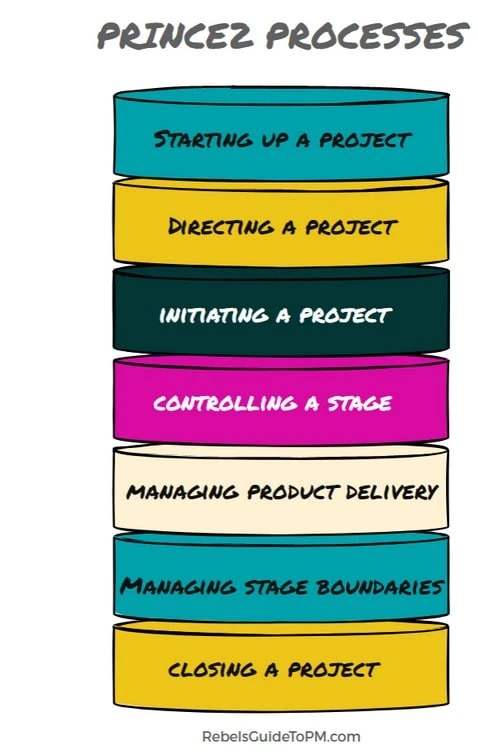
PRINCE2 is a project management method (Projects In Controlled Environments). It provides a defined structure for managing projects, including roles, governance, lifecycle stages, and management products.
The method is designed to be tailored, but it’s still prescriptive because it covers the ‘how’ of getting a project done. It explains how a project should be set up, governed, controlled, and closed. PRINCE2 places strong emphasis on accountability, business justification, and management control.
PRINCE2 is owned by PeopleCert. It used to be owned by the UK government through The Stationery Office, but that changed a while back.
I often see that PRINCE2 is used in environments where clarity of responsibility and formal decision-making are important, such as the public sector or regulated industries.
This is the current PRINCE2 manual that is required for the exam. It's surprisingly readable and it's worth getting a paper copy as you can take it in to the Practitioner exam for reference.

The fundamental difference: guide versus method
Can you see the difference? I believe it’s in the intent.
The
PRINCE2 is a method. It provides a structured way to manage a project, including defined roles, processes, and governance mechanisms. It helps organizations control projects consistently and transparently.
In simple terms, PMBOK supports decision-making, while PRINCE2 supports organization and control. They answer different questions and are often complementary rather than competitive.
One way to think about it is:
- The
PMBOK® Guide helps you decide what to do. - PRINCE2® helps you decide how to organise and control it.
Another BOK: APM
The Association for Project Management also has a Body of Knowledge (APM BOK). This is another take on collecting the wisdom of the profession into a guide for project managers. This one focuses a lot more on soft skills.
Governance and accountability
Governance is one of the clearest areas of difference between the two books.
PMBOK recognizes the importance of governance but does not define a specific governance structure. It assumes that governance exists at an organizational level and that projects operate within it. Accountability, escalation paths, and decision authority vary depending on the organization and context.
And also with which project delivery method you are using – predictive, iterative or hybrid.
PRINCE2, on the other hand, defines governance and project assurance explicitly. It introduces a Project Board with clear accountability split between formal roles:
- Executive
- Senior User
- Senior Supplier (who could be internal).
Tolerances are used to define when the project manager can act independently and when issues must be escalated, for example, when project performance falls outside of set targets that you’ve predefined with your sponsor.
However, both books talk about tailoring project management procedures, so your governance is fit for purpose.
Principles and mindset
Both frameworks are principle-led, but they approach principles differently.
PMBOK 8 is built around a set of project management principles that emphasize value delivery, systems thinking, quality, leadership, sustainability, and collaboration. These principles are behavioral and mindset-oriented. They describe how effective project professionals think and act rather than what steps they follow.

PRINCE2 retains its seven principles, which must be applied for a project to be considered PRINCE2-compliant. These principles include continued business justification, learning from experience, defined roles and responsibilities, managing by stages and by exception, focusing on products and tailoring to suit the project. The latest version places more emphasis on people and sustainability than earlier editions.
Both frameworks expect tailoring and professional judgment. Neither promotes a one-size-fits-all approach, even though PRINCE2 is more structured in how that tailoring is applied.
Knowledge areas and practices
Informally, many project managers still refer to Knowledge Areas, but they are no longer in the
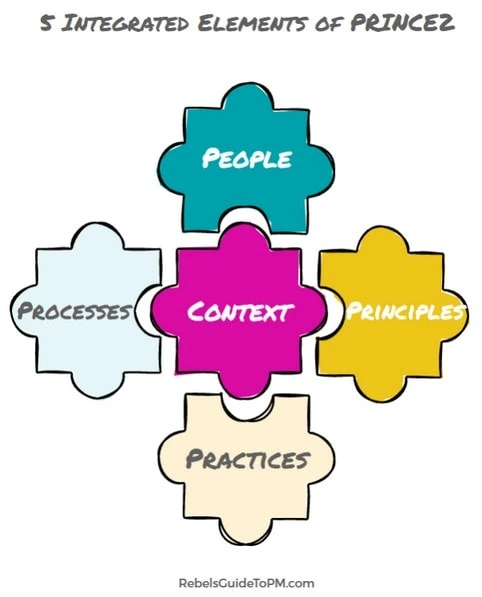
PRINCE2 has something similar – practices.
Both performance domains and practices are kind of ‘things you need to consider and actively manage and bear in mind during a project’. Key callout areas for a project manager to pay attention to.
As you’d expect from books put together by different groups, they are different, but there is a bit of overlap.
The PRINCE2 practice of Organizing is all about securing resources, project roles and the project management team. Risk management is the same for each. Governance is covered by Business Case and Progress (which is about tracking actuals and delivery management).
Note that there is a whole People section in PRINCE2 outside of the Practices which aligns with Stakeholders, so that’s why there isn’t a People Practice.
| Performance Domain | Practice |
| Finance | Business case |
| Resources | Organizing |
| Schedule | Plans |
| Scope | Quality |
| Risk | Risk |
| Governance | Issues |
| Stakeholders | Progress |
There’s so much you could say about project management I understand the authors had to limit what they covered.
Lifecycle and structure
The PMI guidance does not define a fixed project lifecycle. It acknowledges that projects can follow different lifecycles depending on context, uncertainty, and delivery approach – an
The performance domains in PMBOK 8 are intended to be engaged throughout the project rather than followed in a strict sequence.
PRINCE2 defines a lifecycle based on management stages. Projects are authorized in stages, with formal decision points at stage boundaries. For a project manager, this is great news as it makes authorizing funding and moving through the project a lot easier (I can speak from experience here).
This structure supports governance, funding decisions, and risk control, particularly in complex or high-risk environments.
The key difference is flexibility versus structure. PMBOK allows the lifecycle to emerge from the context, while PRINCE2 embeds lifecycle control into the method itself.
More PRINCE2® Resources
- PRINCE2: The project management method explained
- How to choose a PRINCE2 course online
- The Best PRINCE2 exam simulators
- MPlaza PRINCE2® Practitioner exam simulator review
- MPlaza PRINCE® Foundation exam simulator review
- PRINCE2® and PMBOK®: How they compare
- 7 Best PRINCE2 books (Including PRINCE2 Agile books)
- What PRINCE2 certification should you get?
- The Best PRINCE2 course for beginners
- 12 Tips for PRINCE2 Practitioner exam success
Documentation and management products
Documentation is another area where people often think the guidance differs.
PMBOK does not mandate specific documents. It focuses on outcomes, information flow, and decision-making rather than templates. Artifacts are expected to be appropriate for the project and organization.
PRINCE2 defines a set of management products, such as the Business Case, Project Plan, Risk Register, and Issue Register. These products support governance and control, but they can feel heavy if they are not tailored sensibly.
One of the ‘concerns’ I hear about PRINCE2 all the time is that it is bureaucratic – often from people who haven’t read the book or who don’t work in a PRINCE2 environment. I think that criticism was justified a long time ago, but the method has been revised so much in recent years that you can’t say it’s too heavy any longer.
The role of the project manager
PMBOK treats the role of the project manager as contextual. Authority, responsibility, and influence vary depending on the organizational environment. Leadership, facilitation, and integration (the ability to bring all the strands of a project together) are emphasized alongside technical skills.
In practice, PMBOK relies more heavily on professional judgment to determine what documentation is needed, while PRINCE2 assumes that defined products enable transparency and accountability.
PRINCE2 defines the project manager role very clearly. The project manager manages the project on behalf of the Project Board and operates within agreed tolerances. Authority is explicit and bounded.
In practice, that rarely happens, but it’s good to have goals!
This difference in how the role is set out makes sense with a bigger picture view. PRINCE2 delegates the project manager authority to support governance, while PMBOK reflects the variability of real-world project environments.
Focus on value and benefits
Both PMBOK and PRINCE2 emphasize value – although the value approach is something that feels new in PMBOK 8 (there has been some social media chatter about this!).
The
Nothing radical there, anyone who has ever looked at project benefits realization management will have thought that way for years.
PRINCE2 embeds value through the Business Case and the principle of continued business justification. A project should only continue while it remains viable, desirable, and achievable.
Again, not rocket science. The moment a project isn’t going to meet business needs is the moment you should be questioning whether we still need to work on it.
Where PMBOK and PRINCE2 align
The
As we’ve seen, both are principle-based. Both require tailoring. Both support predictive projects, agile teams, and hybrid environments (there is a specific PRINCE2
Both books take up space on your desk and feel reassuringly complete. They both assume competent professionals are in post who can apply judgment rather than follow rules blindly.
Which should you use and when
The choice between following what the
- Bodies of knowledge, like the
PMBOK Guide , define what good looks like(at a given moment in time, based on the collective wisdom of the contributors, so it cannot be exhaustive) - Project management methods, of which PRINCE2 is one, define how to manage and govern a project in a particular way.
PMBOK can be the wrapper around the individual processes and delivery method you use. So while you could use both, in practice people don’t because that truly would be bureaucratic overkill – and the
In my experience, European organizations have traditionally leant towards PRINCE2 and US organizations tend to stick with PMI’s methods. But now APM is the Chartered Body for the Project Profession in the UK, more and more UK organizations are requiring APM credentials, and for that BOK to be used.
As an aside, the APM BOK is also non-prescriptive and could be used as a wrapper for PRINCE2 delivery teams.
A note on certification
It is worth separating frameworks from certifications. The
Can you use PMBOK without having the
Holding a certification doesn’t mean you have to use that approach exclusively. You probably know many certified professionals who work in a blended environment and draw from multiple sources of good practice, including frameworks and project management methodologies that have been built in-house.
So which is better?
That’s the wrong question! The question is not whether The
Your project management office could choose to use either and both choices are perfectly valid.
If you want to be truly great at managing projects, you need to realize that it’s isn’t the method you follow that will make your projects successful. It’s how you apply what you know, engage stakeholders, get approval, navigate your internal politics and keep the project team motivated to deliver something that everyone agrees is going to be a good idea.
