What should a project timeline include?
Creating a plan on a page? This is the ultimate guide to what to include in your project timeline (and what to leave out). Click to read more!

Strong scheduling is what turns strategy and intent into delivery. You can have a clear business case, aligned stakeholders and an experienced team, but without a realistic, well-managed schedule, progress becomes unpredictable. And that makes it difficult to realize any value from what you’ve worked so hard to achieve.
There is a lot of content on RebelsGuideToPM about scheduling. This section brings together some of the most popular guides to timelines, estimating and techniques to build, analyze and manage your project schedules. Whether you use Gantt charts, roadmaps, rolling-wave planning or lightweight task tracking, the goal is the same: create a schedule that reflects reality and supports decision-making.
Good scheduling is not about producing a perfect plan. It is about creating visibility, identifying dependencies early and making informed trade-offs when constraints shift. And as the project manager, it’s your responsibility to help the team get there.
If you’re starting out, start here! Eventually you’ll manage your projects with scheduling software, Gantt charts or Kanban-style boards, but for a lot of people, a simple Excel spreadsheet of tasks as a kind of project calendar or a PowerPoint slide is a good starting point.
Timelines are also useful for communicating complicated schedules to stakeholders whom you know will never read a Gantt chart. A lot of project sponsors expect simple plans on a page in a presentation deck, because that’s what helps them make exec decisions and see the bigger picture.
Timelines show what will happen, when it will happen and how different workstreams interact, that’s basically what a Plan on a Page (POAP) is. A well-designed timeline does more than list high level. It clarifies sequencing by flagging important dependencies, highlights risk and provides a shared reference point for the team and stakeholders. So they can never say they didn’t know what the dates were!
Across the website you’ll find guidance on building effective project timelines, structuring milestones, linking dependencies correctly and avoiding common mistakes such as over-compression or missing critical path logic. You’ll also see examples of timeline formats for different audiences, from detailed delivery plans to executive-level summaries. Get started with some of the most-read articles below.

Creating a plan on a page? This is the ultimate guide to what to include in your project timeline (and what to leave out). Click to read more!

When it comes to project planning, nothing beats the good old roadmaps, timelines and Gantt charts. See 5 real-world project timeline examples in this article.
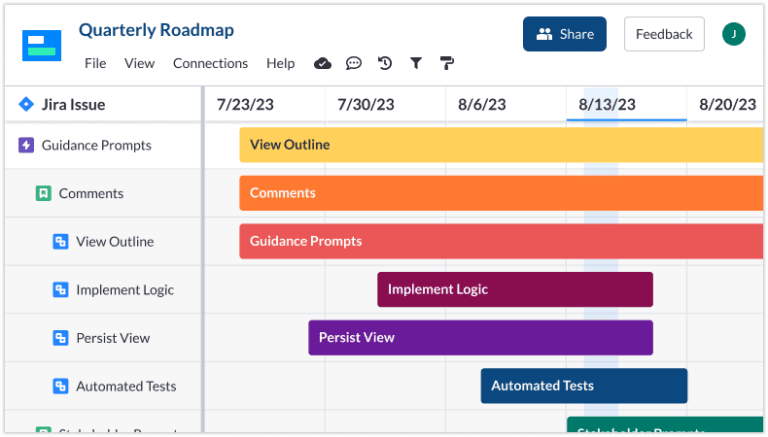
Learn how to level up your Jira roadmapping with these tips for sharing, syncing and making your roadmap look fantastic.
In my experience estimating, especially knowledge work, is a real skill. And let’s face it, most people are guessing at how long it’s going to take them, because we don’t work on one project at a time, and they’ll be mentally adding in their other responsibilities and trying to carve out an elapsed time that gives them a margin to get the work done.
Estimating is where many schedules begin to fail. Over-optimism, unclear scope and hidden dependencies can undermine even the most carefully constructed plan.
However, there are skills you can use for estimating, to help your team get better at predicting how long work takes.
Below, you’ll find my top articles with practical advice on improving estimate accuracy, selecting appropriate estimating approaches and involving the right subject matter experts at the right time. The focus is on producing estimates that are realistic, transparent and defensible, not just optimistic!
No estimate is ever perfect, but disciplined estimating significantly increases your confidence in the schedule you publish and reduces the likelihood of unpleasant surprises later, so it is worth spending some time alone and with the team brushing up your skills if you want your schedules to be reliable.

Everything you need to know about estimating including the basics, 5 Project estimating techniques, knowing which to choose, and what to do next.

Parametric estimating is a form of project estimation that works for time, resource and cost estimates. Learn more about it in this guide.

Learn Estimate at Completion is for project managers, how to use it (because there are 4 different ways) along with examples + a free template.
Beyond timelines and estimates, effective scheduling relies on structured techniques that bring logic and discipline to planning. These are the ‘hard’ skills of project management, and you can learn them, even if you are just starting out.
Across the site, you’ll find articles that cover tools and methods such as work breakdown structures, critical path analysis, rolling-wave planning, and managing task dependencies. You’ll also find guidance on choosing the right level of detail for your environment and adapting techniques for Agile or hybrid delivery models.
As a practitioner, it’s worth learning about float, resource planning, schedule risk, critical chain, precedence diagramming method and milestone planning because it gives you background and the underpinning knowledge to make the right choices about the techniques you are going to use — even if you then choose not to use them.
The right technique does not make a schedule rigid. It makes it more robust, easier to analyze and simpler to adjust when conditions change. Because they will change! Your schedule is only as good as the day it was produced… it’s could look different in a week, and if you’ve built it correctly, that probably won’t matter in the grand scheme of things.
Explore the resources below to get started!
Being asked to track percent complete? Here are 3 ways to do it without guessing.
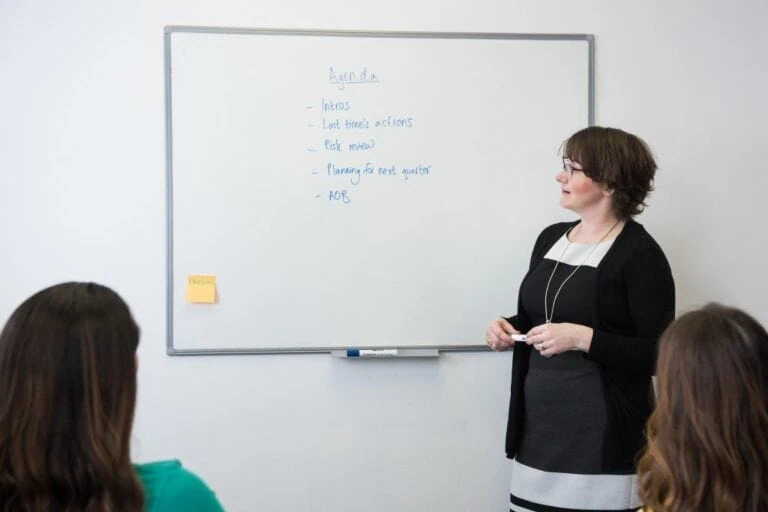
Check out these advanced skills you can use to level up your project schedules right away.

Discover the differences between resource leveling and resource smoothing for project scheduling, and learn when to use each for optimal results.

Explore the differences between crashing and fast-tracking projects, and learn when to use each schedule compression technique for maximum benefit.

Rolling wave planning, also known as progressive elaboration, is an iterative planning technique to use when it’s difficult (or pointless) to schedule too far ahead. The APM Planning, Scheduling, Monitoring and Control Guide (2015) defines rolling wave planning as ‘the planning density that is achieved at different moments in time. Primarily more detailed planning in…

Demystify project dependencies and constraints with this comprehensive guide. Learn why they are important and how they relate to your project.
Here’s a collection of videos from me and some of my favorite creators on the topic of scheduling, so have a browse through.
Here are the questions I get asked the most often! From technology to task lists, these things come up in my mentoring sessions time and time again.
There is no single “best” scheduling software (sorry!). The right tool depends on your project environment, reporting needs, team maturity and integration requirements.
For smaller projects, a lightweight task tracker or basic Gantt tool may be sufficient, in my experience this is what a lot of early and mid-career project managers use. Larger or more complex initiatives may require software that supports dependency logic, critical path analysis, resource loading and scenario modeling. Once you get over 60ish tasks, managing on a spreadsheet is a pain. Enterprise environments often prioritize integration with portfolio management, finance or time-tracking systems so cost control and resource allocation can all be joined up.
When selecting scheduling software, focus on, the complexity of your projects, the level of reporting required, whether you need resource and cost management features, integration with other systems and most importantly, ease of use for the people maintaining the plan!
So in summary, the best tool is the one that supports accurate planning and active schedule management in your context. A sophisticated platform used poorly is far less effective than a simpler tool used well.
Yes. On large or highly complex projects, scheduling can be a full-time professional role.
In industries such as engineering, construction, infrastructure and energy, dedicated project schedulers or planning engineers are responsible for developing and maintaining detailed schedules. These professionals specialize in tools such as Oracle Primavera or advanced scheduling systems and work closely with project managers, cost controllers and site teams. They’ll also be responsible for the scheduling parts of earned value management and they spend a lot of time getting updates!
On smaller projects, scheduling is typically part of the project manager’s responsibilities. However, as project scale and complexity increase, the technical demands of maintaining a robust schedule often justify a specialist role.
Project management scheduling is the process of organizing project work over time. It involves identifying tasks, estimating their duration, sequencing activities based on dependencies and creating a timeline that shows when work will be completed. It’s something the team doing the work does together. It never works to have the project manager come up with the plan alone (in case you were thinking of doing that).
Scheduling translates scope into a time-based plan. It allows project managers to identify the critical path, forecast completion dates, monitor progress against milestones, assess the impact of delays, make informed trade-offs between time, cost and scope and keep stakeholders informed.
Effective scheduling is not just about creating a chart. It is about continuously analyzing and adjusting the plan as conditions change.
There are several established methodologies and techniques used to develop and analyze project schedules. The most common include:
Critical Path Method (CPM): Identifies the sequence of activities that determines the minimum project duration. It highlights which tasks cannot be delayed without affecting the overall finish date.
Program Evaluation and Review Technique (PERT): Uses probabilistic time estimates to account for uncertainty in activity durations. Often applied in research and development environments.
Work Breakdown Structure (WBS): A hierarchical decomposition of project scope that provides the foundation for task definition and scheduling.
Rolling-wave planning: Plans near-term work in detail while leaving future work at a higher level, refining it as more information becomes available.
Agile and iterative scheduling approaches: Use timeboxed iterations, sprints or increments instead of a single, fully detailed long-term schedule.
What you’ll choose depends on the nature of the project, the level of uncertainty and the governance requirements. In practice, many organizations combine elements of multiple techniques to suit their delivery model. There’s no hard and fast rule about what to use.
Below you’ll find the full archive of articles related to project scheduling. This includes in-depth guides to advanced techniques, practical walkthroughs and lessons learned from real-world projects.
Use these resources to deepen your understanding, refine your approach and strengthen the reliability of your plans. Whether you are new to building schedules or looking to improve complex, multi-project timelines, you’ll find detailed guidance to support your work.

A fixed date project is one that has a defined — and often unmovable — end date for delivery. Learn how to manage fixed date projects.

In my experience, there are some very common reasons for project schedules turning out to be unreliable. Here are 5.
Last time we saw that PRINCE2 doesn’t really have much advice to offer the project manager stuck with delivering to a fixed date. I also gave you some advice from another expert, J LeRoy Ward at ESI. Surely some other project management experts have tackled this problem? I trawled my bookcase for what other people…