
Managing Multiple Projects

Learn how to manage the juggle and keep all your projects moving forward.

Your manager might not say it, but more projects are coming your way. It might not be written in your role profile, but your boss expects you to juggle several things at once.

In today’s project economy, more work is delivered through initiatives layered on top of operational responsibilities. In my research for Managing Multiple Projects, only 15% of respondents reported managing just one project. Everyone else was balancing two, five, or more initiatives at the same time.

Managing multiple projects requires more than good scheduling. Talking about managing multiple projects is my happy place! It demands prioritization across competing objectives, visibility of resource constraints, and disciplined decision-making at both project and portfolio level. This page brings together practical strategies, frameworks, and tools to help you coordinate parallel workstreams without losing control of scope, deadlines, or stakeholder expectations, and an insight into my book that delves deeper into this topic.

There’s so much to say on this topic I wrote a book about it!

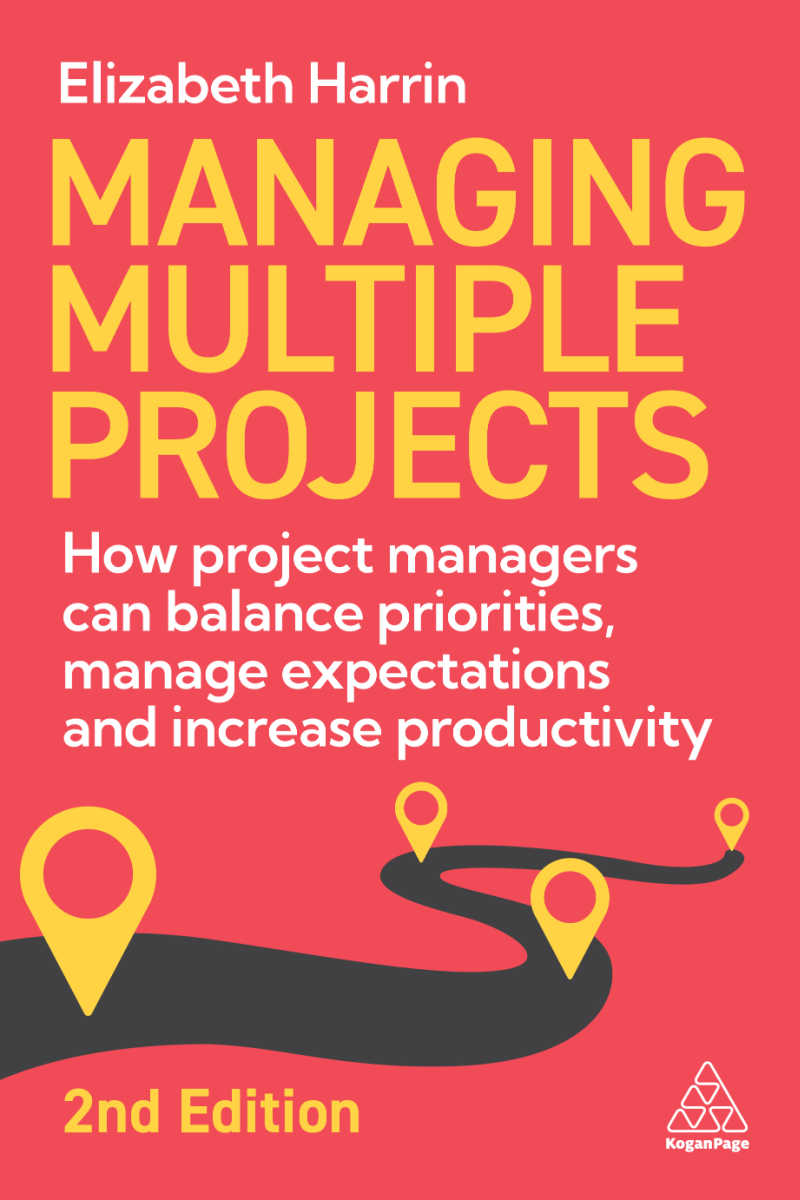
There’s a lot of information on this website and online in general about building effective stakeholder relationships — so if you want to take this topic further, I recommend Managing Multiple Projects: How project managers can balance priorities, manage expectations and increaes productivity (although I am slightly biased as I wrote it!).

Published by Kogan Page (Second Edition, 2025), this book is a practical ‘how to’ guide. As my role changed at work, I took on more projects and realized that the project management training I had done didn’t make sense for delivering multiple projects in parallel. The ‘traditional’ teachings of project delivery assume you’ve got all the time you need to do all the things, and that you (and all your stakeholders) are only focusing on the one project.

That’s not real life, as I understand it, and I know from talking to lots of project managers, and doing a couple of deep dive topics into this subject, that most project managers are in the same situation. We need practical tips on how to juggle all the work, keep governance going while not getting bogged down in documentation, and ensuring that everything keeps moving, even the small, low priority projects.

Managing Multiple Projects by Elizabeth Harrin, 2nd edition cover

Most training teaches you how to run one project well — not how to combine and consolidate, merge project plans, status reports and meetings, and deal with competing deadlines across several initiatives.

That gap is where stress, overwhelm and burnout creep in.

Managing multiple projects is not about simply repeating the single-project process several times. Overlaying the same governance, reports and schedules across every initiative just adds bulk to your workload without necessarily adding value. You need a different way of thinking about your work — one that helps you:

  • Protect your own time and energy
  • Understand your true workload
  • Prioritize with confidence
  • Combine schedules without drowning in detail
  • Engage stakeholders efficiently.

Getting started with managing multiple projects

If you’re new to juggling several initiatives — or you’ve suddenly realized your calendar looks impossible next month –start here!

The first shift is mindset: stop thinking of your projects as isolated streams of work. Start seeing them as a personal portfolio. In a multi-project environment, you’re typically dealing with:

  • Different sponsors, each convinced their project is the most important
  • Part-time resources who have “day jobs” that take priority
  • Conflicting milestones and constant deadline pressure
  • Stakeholders whose interests overlap across initiatives
  • More expectations, more reporting, more decisions.

As I wrote in the book, every day becomes a balance between advancing your own To Do list and supporting others with theirs. Before you worry about what project management tool to use, start with clarity.

1. Create your personal portfolio view

List everything you are responsible for: projects, operational tasks, mentoring, reporting, governance, admin. This becomes your consolidated workload. When you can see it all in one place, you can finally have informed conversations about priority and capacity.

2. Identify what is truly priority

Not everything on your task list can be top priority. Techniques like MoSCoW, ICE, COST or the Eisenhower Matrix can help you structure your thinking. Prioritization is not a one-off decision, it’s a weekly discipline.

Talk to your team members, and make sure you’ve got paths for resource allocation to get sorted when you need it.

3. Consolidate, don’t duplicate

You can’t manage time — time management is just about using the hours that you do have in the most productive way. Instead of maintaining separate mental models for each project, look for opportunities to:

  • Combine reporting cycles and project dashboards
  • Merge stakeholder conversations
  • Group meetings (or cancel them altogether!)
  • Create a single high-level schedule view (I call this ladder or hot air balloon scheduling).

Multi-project management is about reducing friction between projects, not increasing administrative effort. However, it’s worth noting that budget tracking is normally the one place you can’t consolidate, as your finance team will still need per-project time tracking or financial reports.

4. Protect your energy

Workload is one of the biggest contributors to burnout. No productivity system in the world can compensate for structurally unrealistic expectations. If your workload is genuinely too high, evidence-based conversations with your manager are essential.

If you want a structured framework for doing this properly, the five-part Portfolio–Plan–People–Productivity–Practices model in Managing Multiple Projects walks you through it step by step! There are some ‘how to’ guides below to help you get started.


Managing Multiple Projects on YouTube!

Here’s a collection of videos from me and some of my favorite creators on the topic of managing multiple projects. I’ve done a lot of webinars and talks on this topic for a range of podcasts and organizations. Maybe I could do one for you?


FAQ about managing multiple projects

These are the questions I get asked the most often!

How many projects is too many to manage at once?

There isn’t a universal number. The right volume depends on complexity, stakeholder load, resource availability, and how much operational work sits alongside your projects. Two highly strategic transformation initiatives could be more demanding than six small process improvements. The real warning sign isn’t the number, it’s whether you can see your full workload clearly, prioritize confidently, and maintain quality without consistently working late. If you can’t, the issue is capacity, not capability.

Is managing multiple projects different from portfolio management?

Yes, but they are closely related. Portfolio management typically happens at an organizational level and focuses on selecting the right projects. Managing multiple projects is about executing several initiatives personally and balancing your time, attention, and stakeholder relationships across them. However, applying portfolio thinking to your own workload — treating your projects as a personal portfolio — is one of the most effective ways to regain control.

Why does managing multiple projects feel so much harder than running one big project?

It does, doesn’t it?!

A single large project has intensity, but it usually has one sponsor, one core team, and one primary timeline. In a multi-project environment, you are juggling competing sponsors, overlapping milestones, part-time resources, and different stakeholder groups, all at once. The cognitive load increases dramatically because you are constantly context switching.

It’s not that you’ve suddenly become less organized. The environment itself is more complex. That’s how it feels to me. Having to switch between projects multiple times a day can be draining.

How do I know if I’m at risk of burnout?

Early signs of burnout include persistent, ongoing fatigue, declining confidence in your own work quality, being irritable about small issues, and a feeling that you’re always ‘behind’ even when you’re working hard.

If that sounds like you, or if you regularly struggle to disconnect outside working hours, or your calendar leaves no room for thinking time, that’s another signal. Burnout rarely arrives overnight, though. It builds up overtime when workload, expectations, and recovery time (i.e. taking breaks and prioritizing self care — you do that, right?) are consistently taking second priority to work. It’s far easier to try to address it early than trying to recover later.


Other managing multiple projects articles

Below you’ll find in-depth articles covering the realities of leading multiple initiatives at once, because if you’re making project management your career, this is one aspect you can’t ignore! This archive explores topics like:

  • Balancing operational work and project delivery
  • Securing resources when you don’t have line authority
  • Engaging stakeholders across overlapping initiatives
  • Consolidating project schedules and managing dependencies
  • Having difficult conversations about workload
  • Reducing meetings without losing control
  • Streamlining governance in a multi-project environment.

Some articles focus on tactical skills like dependency mapping or resource negotiations. Others address the emotional side of juggling expectations and maintaining confidence when you feel stretched.

Use this archive as your reference library. Dip into the topic that reflects the challenge you’re facing right now, and apply one practical change at a time. A smoother workload and better work/life balance is coming your way!