Creating and using a stakeholder register for project success
Learn how to create a stakeholder register for project managers and maximize success with tips and tricks. Get the most out of your stakeholder register today!
Stakeholder engagement is one of the most critical success factors in project management. Whether you are delivering organizational change, implementing new technology, or managing a complex portfolio, your ability to identify, analyze and influence stakeholders directly affects outcomes.
Effective stakeholder management goes beyond keeping people informed. It requires stakeholder analysis, clear communication planning, expectation management, and the ability to navigate competing interests. From executive sponsors and steering committees to operational teams and resistant end-users, every project stakeholder brings different priorities and levels of influence.
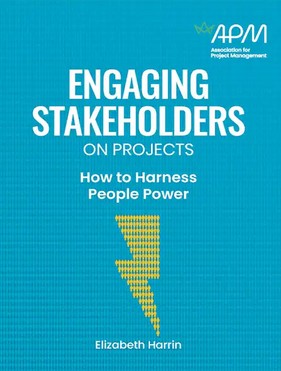
There’s a lot of information on this website and online in general about building effective stakeholder relationships — so if you want to take this topic further, I recommend Engaging Stakeholders on Projects: How to Harness People Power (although I am slightly biased as I wrote it!).
Published by the Association for Project Management as a deep dive into one of the core areas of the Body of Knowledge, this book is a practical ‘how to’ guide. Early on in my career I was fed up of hearing people say I had to ‘engage’ stakeholders but not telling me what that looked like or how to do it. This is the book I wished someone had given me at the time, packed with tried-and-tested tools and techniques that actually work to influence others and help your project get closer to a successful delivery.
On this page, you’ll find practical guidance on stakeholder engagement strategy, links to stakeholder mapping techniques, communication approaches, and managing difficult conversations. Whether you are new to stakeholder management or refining advanced engagement practices, these resources will help you build trust, reduce resistance, and improve project delivery outcomes. Read on to learn how to engage people on projects and manage stakeholder relationships at work — and get things done, even when your colleagues have different priorities!
As an aside on terminology, we don’t talk about “stakeholder management” or “managing stakeholders” any longer, as that implies stakeholders have no agency. Besides, given that they probably don’t work for you, you can’t really ‘manage’ them and you certainly will struggle to ‘manage’ the behavior of senior employees. They’re going to do what they’re going to do!
The current terms to use are stakeholder engagement/engaging stakeholders.
Start here: below you’ll find my favorite selection of articles on how to make a start with engaging stakeholders on your projects.
If you are new to stakeholder engagement, start with the fundamentals. Strong stakeholder relationships begin with clear stakeholder identification and stakeholder analysis. You need to understand who has influence over the product you are creating, who is impacted, and who can affect project success, positively or negatively. So understanding the decision-making process is key.
Across this website, you’ll find guidance on stakeholder mapping, power-interest grids, creating a stakeholder register, and developing your first stakeholder communication plan. These articles focus on practical tools and frameworks that you can apply immediately to improve project alignment and reduce surprises.

Learn how to create a stakeholder register for project managers and maximize success with tips and tricks. Get the most out of your stakeholder register today!

Learn more about the different project stakeholder types and how you can manage your relationships with them like a pro.

Learn why you need to engage stakeholders and how to do so effectively as well as 5 easy engagement ideas.
Clear communication is at the heart of effective stakeholder engagement. A stakeholder communication plan should do more than distribute updates. It should actively shape understanding, build confidence, and reinforce project credibility.
Remember, stakeholder comms is not a one-way street. You’ll be gathering stakeholder feedback, listening to and managing expectations (because not all stakeholders will get what they want), understanding and acting on concerns and taking account of communication preferences so your messages land as well as they can.
Here you’ll find practical advice on crafting stakeholder updates, presenting to steering committees, tailoring messages to different stakeholder groups, and handling challenging conversations. Whether you are writing a project status report (grab a template here), running workshops or interviews, or preparing for a difficult meeting, the resources directly below and further down the page will help you communicate with clarity, authority and impact.

Learn how to communicate RAG status clearly to stakeholders, build trust, and explain red, amber and green project status with confidence.
Find out how to truly engage project stakeholders. The classic stakeholder management tool of the power and influence grid will only get you so far. Make your team ambassadors for your project. By creating a real sense of purpose and a shared vision you’ll get better results and have a higher chance of project success.

Find out how to communicate your project to stakeholders with these 10 tips and ideas. Better communication results in better engagement and ultimately more successful outucomes.
Once you’ve mastered the basics, stakeholder management becomes more nuanced. Advanced stakeholder engagement involves political awareness, influence without authority, navigating organizational power structures, and managing resistance to change.
Below, you’ll find some of the most popular articles on ‘advanced topics’ in stakeholder relationship building. They explore complex stakeholder environments including conflicting stakeholder priorities, executive alignment challenges, difficult sponsors, and high-risk stakeholder groups. You’ll also find strategies for long-term stakeholder relationship management, behavioral insights, and governance considerations that elevate your practice beyond simple reporting and communication.

Find out more about the stakeholder salience model and best practices for using it in project management.

This is a guest article by Christine Unterhitzenberger. Most project managers will have experienced a situation where they have found a stakeholder to be really difficult. This often causes stress and it’s challenging for project managers to find ways to deal with it. A recent study by Dr Clara Cheung and colleagues found that project…

How can you deal with difficult people at work? The kind that block your projects and don’t turn up to meetings? This book has the answer. I pick out some of the highlights to share with you with the aim of making your working day just that little bit easier.
Here’s a collection of videos from me and some of my favorite creators on the topic of engaging stakeholders and communicating across a broad team, so have a browse through.
A stakeholder engagement plan ensures that the right people receive the right information at the right time.
Without a structured approach, stakeholder communication becomes reactive and inconsistent. A stakeholder engagement plan defines who your stakeholders are, their level of influence and interest, how often they need updates, and what type of communication is most effective.
It helps reduce resistance, prevent surprises, and build support for project decisions. Most importantly, it aligns expectations early, which is often the difference between project success and stakeholder frustration.
Stakeholder analysis helps you understand who can influence your project and how to manage their expectations effectively.
By analyzing stakeholder power, interest, impact, and attitude, you can prioritize your engagement efforts. Not all stakeholders require the same level of attention, and you don’t have enough time in a day to provide that.
Some need close involvement, while others can manage (or would prefer) periodic updates.
Effective stakeholder analysis reduces risk, improves decision-making, and ensures that critical influencers are identified before issues escalate. It also supports better governance and more targeted communication planning.
Stakeholder management is the ongoing process of identifying, engaging, influencing, and communicating with stakeholders throughout the project lifecycle.
In practice, this includes maintaining a register of key stakeholders, updating communication plans, managing expectations, facilitating meetings, resolving concerns, and building relationships.
Strong stakeholder management also involves navigating organizational politics, addressing resistance, and adapting your approach as stakeholder priorities shift. It is both strategic and interpersonal: you combine structured planning with emotional intelligence.
A stakeholder engagement framework is a structured approach used to identify, analyze, and engage stakeholders systematically.
Frameworks typically include stakeholder identification, power-interest assessment, communication planning, engagement strategies, and monitoring mechanisms.
Common models include the power-interest grid, stakeholder salience model, and influence-impact matrices. A framework ensures consistency, improves transparency, and supports governance oversight by making stakeholder management repeatable and measurable.
Stakeholder engagement tools are practical techniques used to analyze stakeholders and manage communication.
Common tools include stakeholder registers, power-interest grids, stakeholder needs assessments, influence maps, communication plans, RACI charts, engagement assessments, and feedback surveys. These tools help you prioritize effort, tailor messaging, and monitor stakeholder sentiment over time. When used effectively, stakeholder engagement tools reduce risk, improve alignment, and strengthen overall project performance.
Stakeholder engagement is rarely straightforward, and I’m sure you worked that out after leading your first project! Every project brings different personalities, power dynamics, and communication challenges. While the sections above cover some core principles and advanced strategy, the articles below explore specific scenarios, practical techniques, and real-world examples to help you refine your approach.
On RebelsGuideToPM, you’ll find guidance on stakeholder analysis, communication planning, influencing without authority, and building long-term relationships that support project success. Whether you are leading a transformation program or managing a small internal initiative, these additional stakeholder management resources will help you strengthen alignment, reduce resistance, and deliver outcomes with confidence.
Browse the articles below to explore specific topics in more depth. Whether you are new to leading projects or looking for ways to refine your approach as an experienced project manager, you’ll find actionable advice to support better working relationships, stronger delivery and simple ways to make working with others feel less hard. Because people make projects happen, and we need constructive and positive ways to work with them!
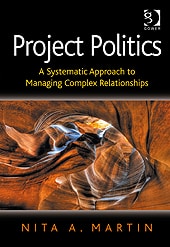
Politics. Every project has politics. Today I’m interviewing Dr Nita Martin, Managing Director of Pure Indigo. Nita’s book, Project Politics: A Systematic Approach to Managing Complex Relationships, deals with that difficult subject of how things get done on projects. Nita, ‘politics’ means different things to different people. How do you define project politics? ‘Project politics’…
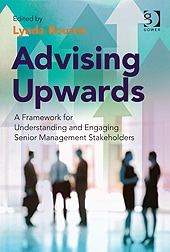
Today I’m interviewing Dr Lynda Bourne, author of Advising Upwards: A Framework for Understanding and Engaging Senior Management Stakeholders (Gower, 2011). Lynda is CEO of Stakeholder Management Pty Ltd, a training and consultancy firm based in Australia. Lynda, your book is about helping project managers communicate better with executive stakeholders. Let’s start at the beginning….

PM Network last month reported that 65% of people feel that there is a generation gap in project management. We are living in the first period where five generations are working together in the workplace. Experienced (i.e. older) project managers now have Generation X and Generation Y people on their teams. The age differences at…
Elyse Nielson from Ascension Health and the blog Anticlue gave a presentation at the PMI Global Congress North America in Dallas in 2011 about sponsors and their interaction with the project. She talked about the importance of getting the right sponsor for the project and shared some myths about project sponsorship. Elyse pointed out that…
Students coming to study in London for the new university term will quickly realize that in the capital you generally do not assume positive intent. In fact, Not Assuming Positive Intent is the default. You assume that other commuters will fight you for the last tube seat. You assume that your pockets will get picked…

The best thing about going to the hairdressers is having someone wash my hair. The second best thing is being able to sit there for an hour and be lost in my thoughts while someone makes me beautiful. I don’t talk to my hairdresser about holidays or work, and we have fallen into companionable silence….

This is a guest post by Conrado Morlan, the Smart PM. Dear Smart PM… I am a new hire at the project management office of a large corporation. I had been working in project management for several years as a freelancer. Although I consider myself to be a good networker, I found difficulties networking within…
In this final instalment of the ‘working together’ series, I’ll be looking at how to improve the working relationships between project managers and business analysts. Changing working relationships is often more about culture than concrete tasks, but there are some things you can do to smooth any blips in the way that project managers and…
Last week I wrote about what project managers value when working with business analysts. This week I want to focus on what we don’t. Don’t worry: it’s not that bad! The differences in the ways that project managers work and the ways that business analysts work means that it’s not always easy to work together….
Last week I wrote about the way that project managers work, and how this relates to OTOBOS. This week I want to explain what project managers value in our working relationships with business analysts. Project managers see BAs as architects. They are detailed, they decide on and build solutions, they work in a methodical way….
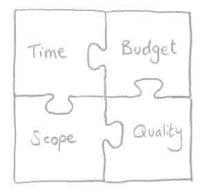
About a month ago I spoke at the IRM UK Business Analysis Conference 2009 about how project managers work, and how business analysts and project managers can work together more successfully. As you can imagine, telling a room full of BAs that project managers don’t want to hear all that detail and analysis paralysis was…

On my mission to turn you all into Office Goddesses, I spoke to Heather White, CEO of The Magic of Networking Ltd, a coaching, training and consultancy firm packed with experts in corporate and career networking. Networking is often something women find especially hard to do. I mean, what’s the point? It’s all chewing the…