
14 Advantages and disadvantages of teamwork: a practical guide with real examples
This blog is reader-supported. When you purchase something through an affiliate link on this site, I may earn some coffee money. Thanks! Learn more.
There are both advantages and disadvantages to working as part of a team. Advantages include being able to pool resources (both human and financial), having built-in support systems, and being able to hold each other accountable.
Disadvantages of teamwork can include conflict between team members, difficulty in making decisions, and feelings of isolation from the rest of the company if you’re not working closely with others on a daily basis.
If you’re weighing up the pros and cons of teamwork (for example, as part of an essay for a university assignment or as part of your APM exam prep), then keep reading! We’ll also discuss team effectiveness models.
7 Disadvantages of teamwork
Here are 7 of the disadvantages of working as a team.
1. People might not work as hard
One of the disadvantages of teamwork is that people might not work as hard since they feel like they are carrying less of the load. Accountability is split between everyone and you might end up with the bystander effect: no one does anything because they feel someone else will step in.
If you’ve ever worked on a team project at college, then you might have come across that one student who just doesn’t seem to want to do anything to contribute, but is happy to stand with you while you take the credit.
Fortunately, at work there are fewer examples of people who are genuinely lazy or so distracted they are unable to take part. Good team leadership means poor performers are put under performance management so they are weeded out. Perhaps it’s harder to hide at work.
2. Difficult to reach consensus
Another disadvantage is that it can be difficult to come to a consensus when making decisions and everybody may not be on the same page.
That’s tricky when you are using techniques like sociocracy and everyone does need to at least not be against the idea. Again, in the workplace, consensus-based decision-making is less of a problem, because normally there is someone with a greater stake in the decision.
Their opinion tends to count for more. Plus there is a hierarchy of decision-making which means the most senior person will often just decide.
Our role in that situation is simply to present a few recommendations. The project sponsor or senior executive then make the choice.
The risk with this kind of decision-making is that they make an unpopular decision, and that can cause discontent in the team. Unhappy colleagues tend to work more slowly and with less interest, so morale drops and below become disenfranchised with what they have been asked to do.
3. Personality clashes
There can also be personality clashes within teams which can make things tense and uncomfortable. Psychological safety is such a buzzword but it’s also a very real sense of knowing that you fit in as your authentic self. And if you don’t have that, it can underpin some conflict.
There isn’t much you can do about that beyond team-building and trying to create a culture where everyone feels like they are respected and heard. As a team leader, your goal is to try not to get into this position by making good hiring choices.
If you are already in a toxic environment, it might simply be easier to move to work somewhere else!
4. Higher risk of conflict
The more people, the more likely it is that tempers will flare at some point.
Conflict in teams can be healthy, for example when you are discussing different options and coming up with what might be the best solution to solve a problem.
But sometimes conflict is just annoying.
If you work alone, you will rarely have soul-destroying conflict with yourself!
5. It takes longer
Yep, doing things as a team takes longer. You have to set individual goals, schedule regular meetings, keep an eye on employee morale and deal with incompetent people. You have to negotiate the division of labor and put a lot more effort into communication.
But doing the job yourself? Simple. Some jobs are easier to get on with and do alone, as long as your personal level of skill means it would be a straightforward task for you.
6. It costs more
OK, the jury is out on this one, but in my experience, the overhead of having a team adds additional costs. There is more expenditure for travel and expenses,
Even extra meetings adds cost, as you pay both for the room hire and also for the time of the people who are meeting.
Not all team types are going to come together regularly for meetings, especially if you mainly do reote work and line managers are able to trust that results will still get delivered. But I do think that collaborative working can add extra cost (short term) to a project.
7. Being in a silo
Sometimes teams can get quite insular. Working with the same people to the exclusion of all others can feel like you’re in a silo and you can’t see the bigger picture.
Teams are essential!
Just so you know, I think the benefits of team working outweigh the disadvantages, but you can’t get away from the fact that even an effective team might struggle with some of these over time.
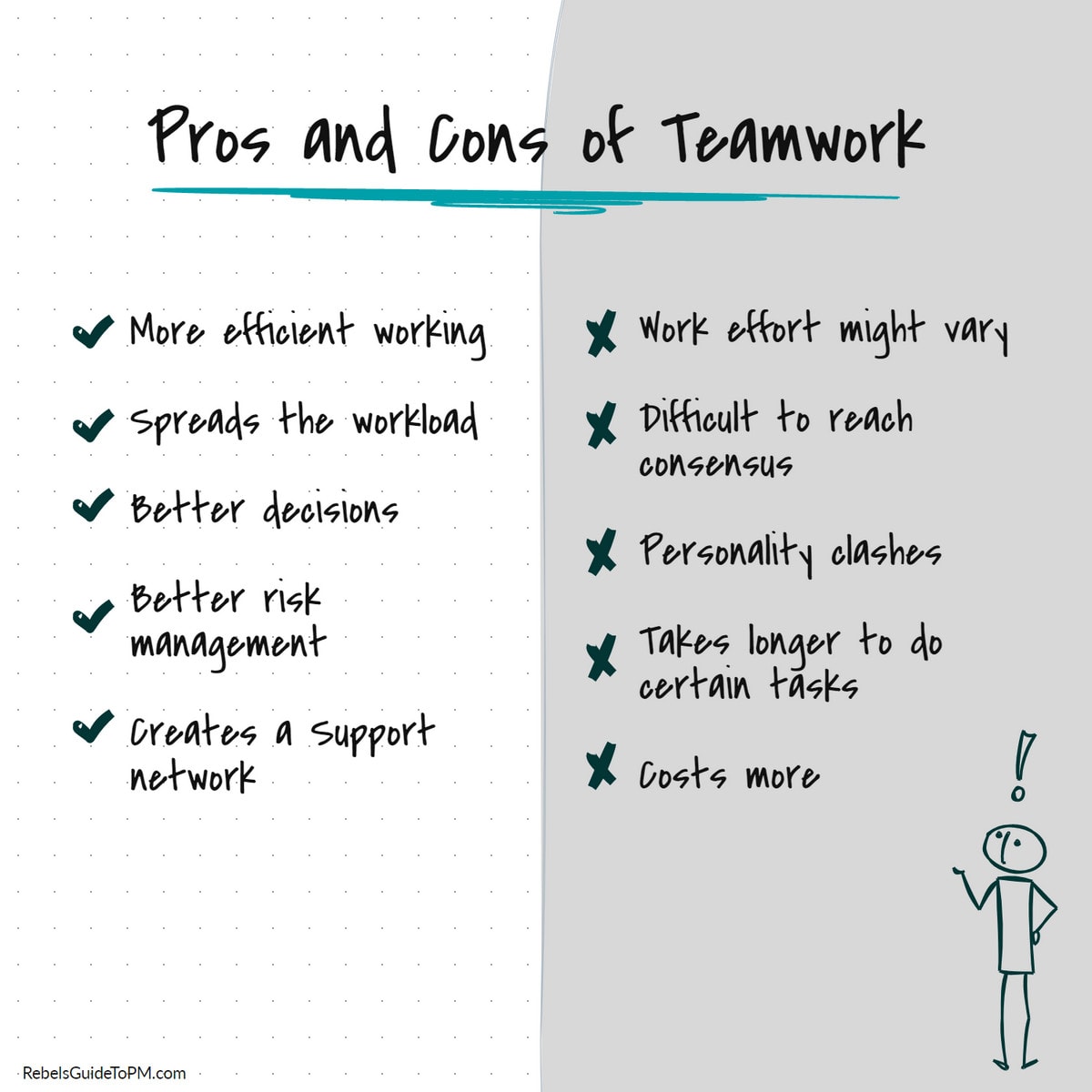
7 Advantages of teamwork
So why do organizations put so much effort into creating teams? The short answer is that the team is more successful than any individual could be alone.
Here are 7 reasons.
1. Efficiency
When you work as a team, you can get things done more efficiently i.e. faster. When everyone is working together towards a common goal, tasks can be completed quicker and with less effort.
People have defined roles and responsibilities and they can get good at their area of expertise. For example, on a project team you’d have a project manager, a project sponsor, probably a supplier, probably a customer rep and some subject matter experts. Each person brings something unique and together they complete the work more efficiently than possible if one person had to do all the roles.
2. Better decisions
Additionally, working as a team can also help to foster communication and collaboration skills among employees. When leaders take a variety of views into account, they normally end up with a better decision because the problem has been considered from multiple angles.
If you are a project manager, there are a few secrets to collaborating with a team that I can share with you: this blog is full of tips!
3. Better risk management
Different perspectives are great at highlighting things that might go wrong. When you bring smart people together, they see things through the lens of their own experience, and that can help identify project risks. Or business risk more generally.
When you know what risks might affect your project, you can better plan to make sure they don’t actually cause problems in the future.
Knowledge sharing across and up and down the hierarchical structure can also reduce risk. Good line managers will flag what they are aware of that is happening outside of the immediate time but that might have an affect on your work process or procedures.
4. Built-in support system
Team members look out for each other. They will support each other, even if they aren’t particularly friends. Over time, a loyalty builds up across the team that creates a mutual support network. It’s kind of hard to explain, but you’ll know it if you have it.
To give you one project management example, I had an early morning email from a colleague who had had a death in the family. He was due to be completing some work that day. Within an hour or so, as a team we’d reorganized the work between us.
In another example (sadly, another death), I called a colleague who was not due to be traveling and she replied, “What do you need me to do?” She traveled to present at a meeting and stepped up to support the team, because that’s what professionals, colleagues and team members do to look out for each other.
In both those cases, I was fortunate to be surrounded by willing, compassionate, professional colleagues who were able to flex their diaries and work to accommodate what was needed — because another member of the team needed that support system.
These teamwork skills can be beneficial in other aspects of life outside of work.
5. Use subject matter expertise efficiently
You can’t be good at everything. A team brings together the right experts to work on a problem or process.
Together, the team is efficient because people are doing what they are trained for.
If you have ever tried to do DIY and found yourself less than expert at it, you’ll appreciate the value of bringing in someone who is competent doing the task!
6. The team is more successful than working alone
Yep, this is the main reason why teams are set up. Results are better when teams work together on problems.
Working together
As an example, when we work together with collaboration tools, a cross-functional team spent less time looking for documentation and sending versions around on email, so we saved time and improved quality.
7. Diversity of opinion
I know how I like things done. But I might not necessarily have all the facts or experience to do the right thing.
An anecdote from a book I read (and if you recognize it, email me as I can’t remember the title! Maybe Invisible Women?) makes this point.
A team of male packaging engineers were struggling with creating the packaging for a frozen dessert. One day, a woman walked into the packaging lab (or wherever they worked) and pointed out how to make the packaging actually work.
Diverse perspectives make for better solutions. In this case, from a woman who was responsible for opening frozen desserts as she managed the household meals and had experience over decades that the men didn’t have.
Probably an old-fashioned example, but it made me realize that it’s important to have diverse opinions on a team as they lead to better solutions.
Challenges and risks that arise from working in teams
When working in a team environment be aware of the potential challenges and risks that can arise. Here are few things to watch out for.
Experience levels
One challenge that can come up is that team members may have different levels of experience or expertise.
This can lead to tension or conflict if people don’t feel like they’re on the same level. Especially if people who are not as qualified or experienced and word gets out that they are paid more than the certified people. Drama!
(Not speaking from personal experience…)
Read next: 5 ways to manage team conflict.
There are ways that you can improve conflict resolution across the team, and remember that not all conflict is bad!
Having to stay on top of changing dynamics
Another potential issue is that team dynamics can change over time.
As people’s needs and goals evolve, new challenges and risks can come up. External factors such as deadlines or budget constraints can also have an impact on the way teams work together. Check out Tucker’s model of Forming, Storming, Norming, Performing and Adjourning to see how the life cycle of teams changes over time.
Productivity paranoia
Virtual teams are a whole other level of complexity. Remote team members need to feel trusted and empowered to do their work. Bosses seem to be struggling with productivity paranoia: 85% of leaders are concerned that employees aren’t working hard enough if they can’t see them.
These challenges can be difficult to manage and can cause problems if not handled correctly. Working in teams can be rewarding and productive, but it’s important to be aware of the challenges that can come up.
By being prepared and working together, you can overcome any obstacles that come your way.
How to overcome the disadvantages of teamwork
We all know that teamwork has its advantages and disadvantages.
But what happens when the disadvantages start to outweigh the advantages?
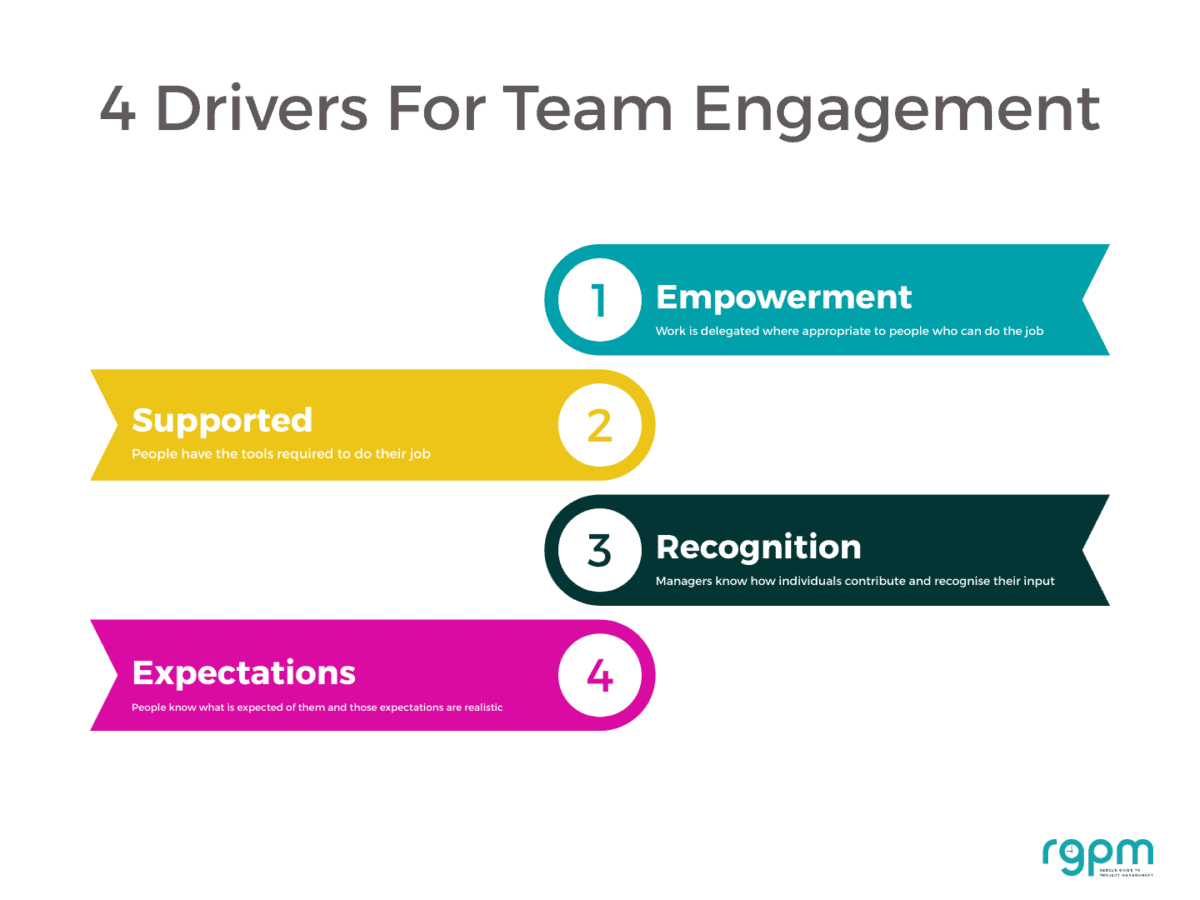
The secret (if there is one) is to stop the disadvantages happening in the first place. Working on your team should be a positive, rewarding affair. There are a few things you can do to overcome the challenges and make teamwork work for you.
Encourage open communication among team members. If team members feel like they can’t openly communicate with each other, it can lead to conflict and miscommunication. Actively work on communication skills.
Make sure everyone knows that they can come to you with any concerns or ideas they have. Knowing there is a listening ear waiting will help everyone feel like they’re part of the team and that their opinion matters.
Build trust by keeping your word and following through on commitments. If team members don’t trust each other, it’s going to be difficult to get anything done.
Respect each other’s time and skillset by delegating tasks fairly. One of the advantages of teamwork is that it allows you to delegate tasks and share the workload. But not delegating tasks fairly creates tension in the team. No one wants to take meeting minutes every week when other people get the cool jobs.
Make sure you take into account each team member’s time and skill set when you’re delegating tasks.
And try to avoid micromanaging – it’ll only lead to frustration on both sides!
Team effectiveness models
You can overcome some of the cons of teamwork by implementing team effectiveness models, and these often come up in exams. Here are 3 examples of team effectiveness models to consider, with some pros and cons.
Tuckman
Tuckman’s team model covers Forming, Storming, Norming, Performing, Adjourning (Adjourning having been added later) — the stages teams go through in order to become highly effective.
We have used these to plot where we think our own teams are and what we would need to do to move them into a future state. You can adapt your leadership style based on where the team is. For example, as a leader, you can be more hands-off when the team is Performing, but you’d want to be more directive in the Forming stage.
However, you might find the team situation becomes fraught with conflict if team members don’t all move through the stages at the same time.
Hackman
Hackman’s 5 factors of team effectiveness set up the criteria required for a team to work optimally. A team needs to:
- Be a ‘real’ team, relying on each other and working together consistently
- Have a unifying mission
- Have a structure that enables work (like a set of processes or norms)
- Work within a supportive context with the tools to do a good job
- Have a leader who can coach (who I suppose does not have to be the actual team manager – they just need access to someone who provides this function).
When these things are in place, a team has what it needs to work effectively.
Katzenbach and Smith
In their 1993 book, The Wisdom of Teams, Katzenbach and Smith talk about team basics as the things that teams deliver. These are personal growth, performance results and collective work products, and the model is often represented as a triangle with those three elements as the points.
This is a useful description for smaller teams, and when you dig into the model you can see how it would work for co-located teams that work on the same deliverable together. Personally, I’m not sure that it is effective for teams like project teams, where we are not creating collective work products, unless you count the broader project deliverables as a work product.
There are lots of other team development models. In practice, it’s helpful to read widely and inform yourself about different thinking and approaches, but you’ll need to tailor and adapt how you implement anything. In my experience, teams rarely fit neatly into management boxes whether they are driven from academic or practical research.
Think about how you can use your team development knowledge to inform how you operate within your own team.
Key Takeaway: Advantages of teamwork: share workload, achieve goals faster. Disadvantages of teamwork: can lead to conflict, trust issues. Overcome disadvantages by encouraging communication, building trust, and respecting team members.
In summary
Overall, the advantages of teamwork far outweigh the disadvantages. When team members are aware of and respect each other’s strengths and weaknesses, they can utilize them to create a well-rounded and effective unit. That could be an operational team or a project team, or another kind of team outside of work, like a volunteer committee.
In this article, you learned about the pros and cons of teamwork, why teams are a good thing, and how to offset the disadvantages by creating a positive working culture.
