Your newest team member won’t show up to stand-up: How project managers become agent bosses
Project managers have been doing the job of the future for decades.
Think about what you actually do all day. You don’t personally write the code, design the screens, or draft the contracts. You get the right people pointed at the right work, with the right information, at the right time. And then you make sure what comes back is good enough to deliver. That’s orchestration.
One small thing is different now – some of the “people” you’re orchestrating aren’t people any more.
The team roster just got longer

AI agents have moved out of the demo and into the workflow. Microsoft’s 2026 Work Trend Index reported 15x year-over-year growth in active agents across Microsoft 365, Status summaries, meeting notes, risk logs, first-draft schedules, stakeholder updates: a growing share of that work is now being drafted by an agent before a human ever touches it.
That leaves many project managers stuck in an uncomfortable spot. Leadership wants AI “adopted.” Your team is quietly experimenting (or quietly avoiding it). It feels like yet another thing on an already-full plate.
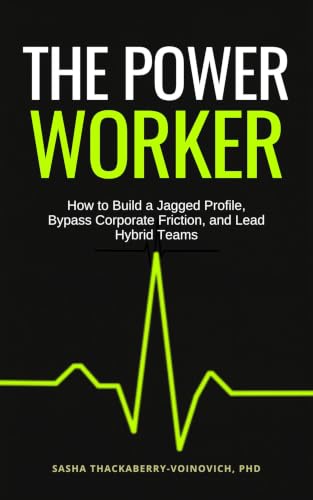
Let’s flip that script. In The Power Worker, I describe the defining leadership role of this era as the Agent Boss: the professional who orchestrates networks of AI agents alongside human teams, sitting upstream of the technology to define the what before the systems build the how.
Project managers are not behind on this. You are the closest thing the modern workplace has to a natural Agent Boss. You just need to translate a skill you already have.
Prompting a machine and briefing a human are the same skill
One of the central arguments in the book is that leading an AI-integrated team doesn’t demand elite coding fluency. It demands masterful contextual direction. And the principles that make a prompt work for a machine transfer almost perfectly to the way you brief a person.
The RICE methodology for prompting reflects this. PMs, I know. This isn’t the Reach-Impact-Confidence-Effort RICE sitting in your prioritization toolkit. This RICE is about direction, not prioritization: Role, Instructions, Context (and Constraints), and Exemplars.
Role. Tell the contributor who they are in this moment. “You’re the risk reviewer for this release” gets a sharper result than “take a look at this.” An agent told to act as a skeptical QA lead will find different problems than one told to “summarize.”
Instructions. Spell out the steps. Vague asks produce vague deliverables, from people and from machines. “Pull every open dependency from the tracker, flag anything due in the next ten days with no named owner, and rank by schedule impact” is a brief. “Can you check dependencies?” is a wish.
Context. This is where most delegation falls apart. The stakeholder who’s nervous about budget. The executive who hates surprises. The last release that slipped because procurement moved slower than promised. You carry that context in your head, and neither your agents nor your new team members can read minds. Give them the environment, not just the task. This can seem overwhelming, but you can do something as simple as dictating the background on the project, or updates on what has been happening. It doesn’t need to always be a complete, comprehensive brief.
Exemplars. Show what good looks like. Hand over last quarter’s best status report. Share the risk register format your sponsor actually reads. A single strong example does more work than a page of instructions, and this works for an AI agent and for a new hire alike.
Here’s the real secret: when you get disciplined about RICE for your agents, your human briefs get better too. Stronger direction for one sharpens direction for both.
What the agent can’t do (and why you still matter)
If agents can draft the plan, the report, and the risk log, what’s left for you? More than ever.
The Power Worker framework rests on four pillars:
- Domain knowledge
- AI & tech skills
- Divergent thinking
- Antifragile mindset.
For project managers, the first one is the quiet hero. Your domain knowledge is what lets you look at an agent’s beautifully formatted schedule and say, “That’s wrong because the permitting phase never takes two weeks in this county.” AI can produce volume. You provide judgment.
The data backs this up. In that same Work Trend Index, 50% of workers named quality control of AI output as a critical human skill, and 86% said they treat AI output as a starting point rather than a final answer. That’s not a threat to your role. That is your role. You’re now QA for the whole orchestra.
The other thing agents can’t do is read the room. An agent can flag that a stakeholder’s emails have gotten shorter and sharper. It can’t sit across from that stakeholder, figure out that they’re worried about their own boss, and adjust the conversation accordingly. That diagnosis, the why behind the friction, stays human.
Your team takes its cue from you
Your team isn’t waiting for an IT rollout. They’re watching you.
So watch your language, too. In the book, I talk about the Language of Possibility — deliberately replacing constraint phrases with three questions:
- “What would it take?” instead of “We can’t.”
- “What’s possible in 48 hours?” instead of “We don’t have time.”
- “What would the best version look like?” to push past the first acceptable answer.
When a team member says, “We don’t have time to set up an agent for the weekly report,” try: “What’s possible in 48 hours?” A rough first version that saves 30 minutes next week beats a perfect plan that sits in a pretty binder on a shelf collecting dust.
Start your Agent Boss practice this week
You don’t need a transformation program. Keep it simple:
- Pick one recurring deliverable. The weekly status report is a perfect candidate — predictable format, painful to assemble, easy to judge.
- Write a RICE brief for it. Role, Instructions, Context, Exemplar. Use it with your AI tool of choice, then hand the same brief to a teammate and compare what comes back.
- Own the quality check. Review the output against what you know about the project, the people, and the internal politics. Note what the agent missed. That list is your domain knowledge, made visible.
Do that for a month and you’ll have something far more valuable than an AI “adoption” metric. You’ll have a repeatable way of directing work, both human and machine, that makes your projects faster and your judgment more visible.
The future of project management isn’t about competing with the machines. It’s about being the one who tells them what to build.
Curious to learn more about becoming a Power Worker?
