PMBOK vs PRINCE2 explained: key differences and similarities
A practical comparison of PMBOK and PRINCE2, explaining how they differ, where they align, and how project managers use them in real organizations.
Project management methods and frameworks give structure to how work is delivered. They provide guidance on roles, processes, artefacts and decision points so that teams are not reinventing the wheel on every project. From predictive approaches to adaptive delivery and hybrid models, the right framework helps teams align expectations, manage risk and deliver value consistently.
However, no single method fits every environment (or every project). Organizational culture, regulatory requirements, team maturity and the nature of the product all influence which approach works best, and it’s normal for companies to have several methods that are in use at any one time. This page brings together practical guidance on widely used project management methods and frameworks, helping you understand what they are, how they differ and when to use them, so you can make the best decisions for your projects.
Whether you are studying for a certification, choosing an approach for a new initiative or simply sense-checking your current way of working, you will find clear, experience-based insights here.
A method is a specific procedure for a task. In project management, that might be a defined way to estimate work, manage risk, plan a schedule, or control change. Methods are practical techniques you apply to complete particular activities within a project. Examples are things like critical path method, using a work breakdown structure, earned value management or the PERT method for scheduling.
A methodology, by contrast, is a collection or system of methods and processes that guide how a project is delivered. It brings together multiple methods into a coherent structure. A methodology defines how those procedures fit together across the life of the project, including governance, decision points, roles, and documentation standards.
The broader term approach or framework describes the general way of thinking about and structuring delivery. An approach sets the philosophy and overall structure. Within that approach, you apply a methodology. Within that methodology, you use specific methods.
Understanding these distinctions helps avoid confusion. You might follow an Agile approach, implement a Scrum methodology within your organization, and use specific methods such as backlog refinement or planning poker to deliver the work. Clear terminology supports clearer thinking about how projects are actually managed.
Different people define methods, frameworks, methodologies, approaches and best practice (or as I prefer, good practice) in different ways, so make sure you are aligned with your definitions if you are using these terms with your colleagues. A few of my most popular articles on these topics are linked below as your starting point.

A practical comparison of PMBOK and PRINCE2, explaining how they differ, where they align, and how project managers use them in real organizations.

Learn more about hybrid project management including what it is and how it is being used in project management today.
The Project Management Body of Knowledge (PMBOK Guide) and the Project Management Professional (PMP) certification are associated with a structured, knowledge-based framework for project management. These are the Project Management Institute (PMI) ways of working. Rather than prescribing a single rigid methodology, the PMBOK Guide provides a comprehensive body of knowledge that outlines principles, domains, and performance areas that underpin effective delivery.
Remember though, the book is just a guide to the body of knowledge — the actual body of knowledge is everything we know about project management in the whole world, and that wouldn’t fit in a book! The PMBOK Guide, like all the other published bodies of knowledge and project management books, just highlights the bits the authors thought were the most important and relevant for most projects.
Earlier editions of the PMBOK Guide organized project management around process groups such as initiating, planning, executing, monitoring and controlling, and closing. More recent editions emphasize principles and value delivery, recognizing that projects operate in varied and complex environments.
The PMP credential demonstrates that a practitioner understands this broad framework and can apply appropriate methods within different contexts. It reflects professional judgment across scope, schedule, cost, quality, risk, stakeholder, and integration management. And you need to demonstrate your experience working in a project team before you can apply for it.
The PMBOK Guide is widely recognized globally and often valued in complex, regulated, or large-scale program environments, especially in the US.

Learn what the 7 project management performance domains are, how they work together, and what they mean in practice for PMP® exam prep and real-world delivery.

Learn the principles of project management and how to apply them to your role as a project manager.
PRINCE2 (Projects IN Controlled Environments) is a structured methodology that defines a system of processes, roles, and controls for managing projects. It is built around clearly defined principles, themes, and processes that guide how work progresses from initiation through closure.
PRINCE2 places strong emphasis on governance and accountability. It requires a continued business justification through gate reviews and defines tolerances for time, cost, project scope, quality, risk, and benefits. This creates a clear escalation model and formal decision-making structure between the project manager and the project board.
Unlike a loose framework, PRINCE2 sets out an integrated methodology which is grounded in predictive project management (so different from iterative delivery cycles). However, it is explicitly designed to be tailored. Organizations adapt the processes and documentation to suit project size, risk profile, and complexity. When applied proportionately, it provides clarity of roles, structured control, and transparent oversight.
There’s also an agile version, that helps professionals adapt the principles and structure of PRINCE2 to agile ways of working, so the book has moved on a lot from the days where this was considered ‘traditional’ project management!

Whether you are studying for the exam or want to supplement your learning, here are the 7 best PRINCE2 books that I recommend.

Here’s everything you ever wanted to know about PRINCE2: the tailorable project management method that suits many types of projects and is surprisingly easy to use
Agile project management is best understood as an approach or framework rather than a single methodology. It is rooted in a set of values and principles that prioritize adaptability, collaboration, and incremental delivery. You might also hear it called adaptive project management, but I think the jury is out on everyone having a common definition for what this actually means, beyond ensuring you have tailored and adapted the way you are managing the work.
Within the Agile approach, there are specific methodologies such as Scrum, Kanban, Extreme Programming, feature driven development and lean management.
Each of these methodologies defines a system of methods and processes that guide delivery. For example, Scrum includes defined roles, events, and artifacts that structure how teams work iteratively.
At the method level, Agile teams use specific procedures such as maintaining a product backlog, backlog refinement, sprint planning, daily standups, or story pointing. These are methods applied within a broader methodology and approach.
Agile emphasizes iterative development, continuous feedback, and responsiveness to change. It is particularly effective where requirements evolve or uncertainty is high. While it encourages flexibility, it still relies on structured methods and disciplined application to deliver value consistently.
Here are a few popular articles to help you get more familiar with agile ways of working.

The Agile Manifesto has probably had the greatest impact on how projects are done – even how non-agile projects are done. The concept of iterating, developing and focusing on value are principles that even predictive projects benefit from.

Read on for comparing agile methods. Have you ever wondered what the difference is between Scrum, Kanban and Scrumban? Me too. So I set out to find out what the differences were. All your questions about the different Agile methods answered (well, most of them).
Sometimes it is easier to understand a framework when you see it explained visually. This playlist brings together video walkthroughs of key project management methods and frameworks, breaking down terminology and comparing approaches in straightforward language.
The videos cover the principles behind each method, the situations where it is most effective and common misconceptions that cause confusion. They are designed to support both practitioners and those preparing for certifications, offering concise explanations without unnecessary jargon. And there’s a lot more on YouTube, so if you find a topic that you want to go deeper in, have a browse. You’ll be sure to find someone who has done a deep dive!
If you prefer to learn by listening and watching, start here before diving deeper into the written guides. Here’s a collection of videos from me and some of my favorite creators on these topics.
Here are the questions I get asked the most often! From choosing the ‘right’ methodology to doing it by the book (you don’t have to, btw, tailoring is the answer), these things come up in my mentoring sessions time and time again.
The way I explain it is a method is a specific procedure for a task, such as risk identification, estimating, or change control. A methodology is a collection or system of methods and processes that guide how a project is delivered. In other words, a method is how you perform an individual activity, while a methodology defines how those activities fit together across the life cycle of the project. Understanding the distinction helps teams avoid confusing practical techniques with the broader delivery structure.
There is no single “best” project management methodology, but several are widely recognized and adopted globally.
The PMBOK framework from the Project Management Institute is one of the most popular and internationally recognized bodies of knowledge. It provides principles and performance domains that organizations use to build their own methodologies. The PMP certification is aligned to this framework.
In the UK and parts of Europe, the APM Body of Knowledge is also influential. Like PMBOK, it is a comprehensive framework that describes the knowledge areas and competencies required for effective project delivery.
PRINCE2 is a structured methodology that defines processes, roles, and governance controls. It is particularly common in public sector and regulated environments.
Agile-based methodologies such as Scrum are widely used in software and product development environments.
Other recognized frameworks include P3.express, which is designed as a simplified and scalable project management system, and PM² (PM squared), developed by the European Commission to support consistent project delivery across EU institutions.
Ultimately, organizations select or adapt elements from these frameworks to create their own tailored methodology.
Large corporations do not use a single standard framework across all functions. Most adopt a hybrid model tailored to different types of work.
In technology and product development environments, iterative or Agile frameworks such as Scrum or Kanban are common. These approaches support rapid feedback, incremental delivery, and adaptability where requirements evolve.
In contrast, infrastructure, construction, manufacturing, or highly regulated industries often use more predictive or waterfall-style methodologies. These emphasize upfront planning, defined stages, formal approvals, and tighter cost and schedule control.
At the enterprise level, many organizations build their own internal methodology. This typically combines elements from established frameworks such as pulling from the PMBOK Guide, PRINCE2, Agile approaches, or the APM Body of Knowledge. The result is a corporate methodology that aligns with governance standards, reporting requirements, and risk tolerance. In practice, large corporations tend to use different approaches for different types of projects, selecting the framework that best fits the level of uncertainty, complexity, and regulatory oversight involved.
Below you will find the full collection of articles on project management methods and frameworks. These guides explore both established and emerging approaches, outlining core principles, roles, processes and practical considerations for implementation.
I don’t think you should focus just on theory. I’ve tried to draw from my experience, and I encourage you to reach out to experts in your organization to understand how frameworks operate in real organizational contexts, including hybrid environments where teams blend elements from multiple approaches. You will also find comparisons between methods, helping you decide which structure best suits your project, program or portfolio.
Use this archive to deepen your understanding, support professional development or inform decisions about how to structure delivery in your organization.

This is a guest post by Peter Richards. When considering investing in a training course for yourself, a single staff member or your team, it’s crucial to consider the applications of that course. While PRINCE2® is a carefully-accredited training course, whose original two levels of Foundation and Practitioner have attracted favourable reviews from all over…

I worked with ProjectsAtWork in 2012 to research and analyse good practices for making Agile successful with distributed teams. Agile isn’t the first approach you would think of to manage a project with team members spread all over the world, but actually it is a really common approach. Why people use Agile with a distributed…

If you’ve been around projects for any length of time you have probably come across the Project Management Institute. You might even have heard of PMIEF: the PMI Educational Foundation. But what does it actually do? I thought it mainly sponsored research, but it turns out I was wrong. PMIEF’s Chair, John Rickards, gave a…

As if adopting Agile wasn’t scary enough, Keith Richards from KRC talked about the 8 dangers of Agile at the APM conference last month. And here they are: It arrives bottom up “We don’t really want the techies taking over the organisation,” said Keith. “This bottom up stuff is a bit dangerous.” He made the…
In this video I ask Josh Nankivel from pmStudent.com why he has chosen to use Kanban for managing the tasks for his project team. A transcript of this video is below. Elizabeth Harrin: Hello! My name is Elizabeth Harrin from the blog “A Girl’s Guide to Project Management” and I’m here today with a fellow…
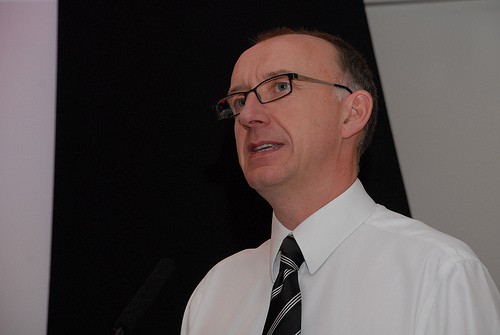
Agile is: Change friendly Iterative Collaborative Chunked delivery Communications focused Business focused Scope tolerant Quality focused (if you do it correctly!) These were the themes that set the tone for Keith Richards’ presentation at the APM Conference in London last month. “The basics of project management seem to have been thrown away with some Agile,”…
Back in 2007, a group of NGO’s met in Baltimore. They realised that their projects were over or under spent and ineffective. “Because we are positive people we saw this as an opportunity,” said John Cropper, Global Programme Co-ordinator for Oxfam’s Raising Her Voice programme. They wanted to do something “by the sector for the…
Please excuse my amateur video skills! This one didn’t come out as well as I had hoped. The transcript for the video is below. Elizabeth Harrin: Well, good morning. I’m here at the National Council for Volunteer Organisations in London just around from King’s Cross. I’m looking at Regent’s Canal. It’s a great location. And…
I attended my first PMI UK Chapter meeting recently and the topic was Lean Six Sigma and Project Management: A Marriage Made in Heaven? I’m not sure what marriage had to do with it, but the presenter, Ishai Perelman, PMP®, Master Black Belt and a senior managing consultant with Pcubed, certainly pointed out the links…
OGC launched guidance last week on managing Portfolio, Programme and Project Offices (that’s P3O® for short). It was a low-key launch event at a great venue south of the river, just along from Tate Britain, which looks beautiful lit up at night. Frances Scarff, head of best management practice for OGC did the introductions, including…